
How to choose and style the perfect coffee table and accent tables for your living room
Coffee tables and accent tables are some of the hardest-working pieces in your home. Here's how to pick the right size, shape, and style, plus how to make them look beautiful without losing function.
Coffee tables and accent tables might seem straightforward, but they're some of the most important decisions in a living room. If you get the scale wrong, the entire space feels off. Choose the wrong shape and the flow doesn't work. And if you style them without thinking about function? You end up with a beautiful table no one can actually use.
At Roseberry Allen, we help clients navigate these decisions regularly. Whether you're starting from scratch or rethinking the space you already have, here's how to choose and style coffee tables and accent tables that work for your space and style.
Function comes first
Before we even think about style, we ask: what do you actually need this table to do? Do you set drinks here every night? Do your kids play on it? Does it need storage? Or is it more of a decorative moment?
If you're someone who uses your coffee table constantly, you need something durable with plenty of surface area. If you have young kids, sharp corners might not be the best choice. If you love the look of a delicate glass table but also like to throw your feet up, it's probably not going to work long term.
Think about how you live in the space and let that guide your choice. A coffee table should be practical first, beautiful second. When you get both right, that's when it really works.
Get the scale right (don't go too small)
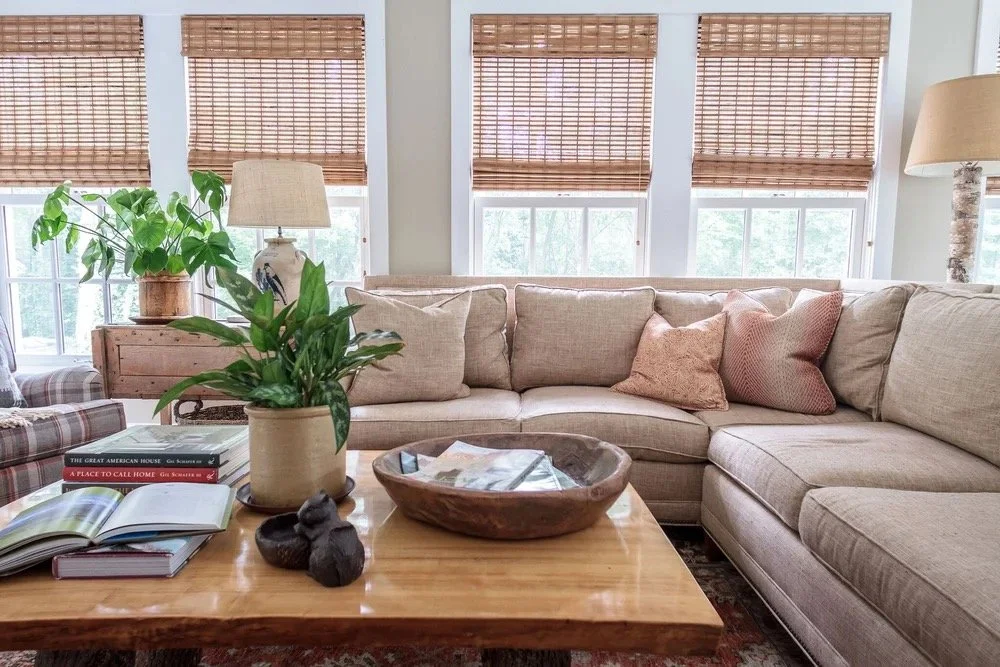
One of the biggest mistakes we see? Coffee tables that are too small. Most people don't realize how much visual weight a coffee table needs to carry in a living room. If it's undersized, the whole seating arrangement feels unbalanced.
If you're not working with a designer, do yourself a favor: measure. The coffee table should be roughly two-thirds the length of your sofa. That gives you enough surface area without overwhelming the space. You want to leave about 12 to 24 inches of breathing room between the edge of the table and the seating around it so people can move comfortably.
Height matters too. Your coffee table should be within a couple inches of your sofa seat height. The standard is around 17 inches tall, but it depends on your specific furniture. If the table is too low, it feels awkward to reach. If it's too high, it blocks sightlines and just looks off.
Capture as much of the footprint as you can. A properly sized coffee table grounds the room and makes everything else feel intentional.
Choose the right shape for your space
Shape isn't just about aesthetics. It affects how the room flows and how functional the table actually is.
Rectangular coffee tables give you the most surface area and work well in traditional layouts. They feel clean and structured, plus they're easy to style. If you have a standard sofa and loveseat setup, rectangular is usually your best bet.
Round coffee tables are softer and great for flow, especially in smaller spaces or rooms with lots of traffic. They work beautifully with four chairs arranged around them or in a square room where you want to soften the lines. Placement matters, though. Round tables need to be positioned carefully because they're not as accessible from every angle. Unless your room is very square or symmetrical, they can sometimes be a challenge to make work.
Square coffee tables are perfect for sectionals or large seating arrangements. They fill the space without feeling too long, offering plenty of usable surface area.
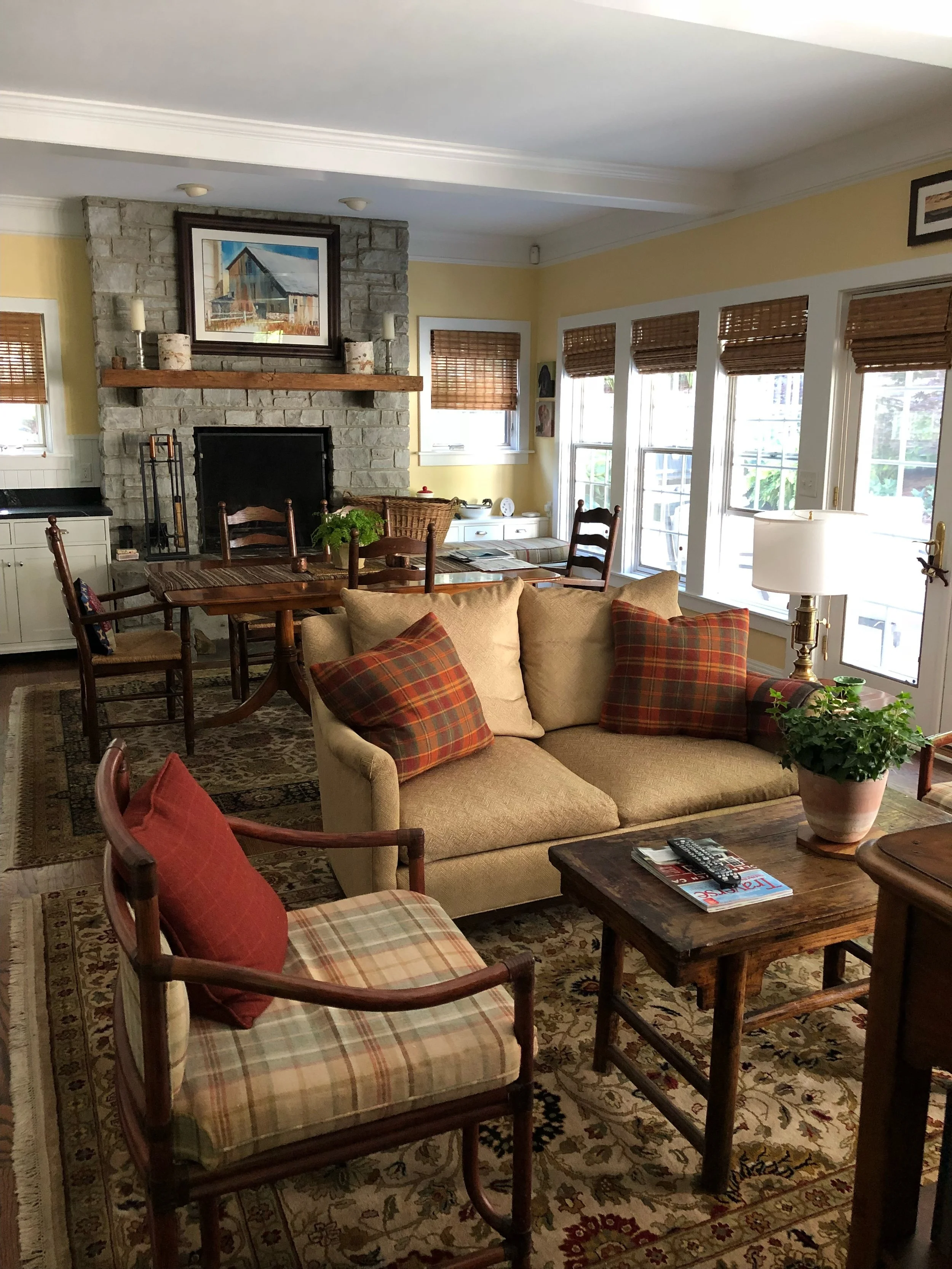
If you have a big sectional or an L-shaped layout, consider using two smaller tables grouped together instead of one large one. It gives you flexibility and can actually look more interesting than a single piece.
Think about the details
Once you have the size and shape figured out, think about the other elements in the room and how the coffee table fits in.
Does your sofa have a skirt? Then a leggy coffee table creates nice contrast and keeps things from feeling too heavy. Do you have two skirted couches? You definitely want something with visible legs to balance all that fabric.
Does the table have a drawer or shelf for storage? That can be a huge bonus if you need a place to stash remotes, coasters, or magazines.
What's the material? If you have a very modern looking sofa, pairing it with something older or more textured (like a wood or stone coffee table) creates beautiful contrast. Mixing styles and eras makes a room feel collected and layered instead of matchy.
Think about proportion in the context of everything else. A 3x5 foot coffee table in a 17-inch height is a good general zone to aim for, but always consider your specific furniture and room size.
Style it with intention (keep it functional)
A beautifully styled coffee table can make the whole room feel pulled together. If it's so cluttered that no one can set down a drink, though, you've missed the point.
We usually work in three zones: something with height like branches or a tall candle, something low like a tray or a stack of books, and something sculptural like a bowl or small object. That's it. You don't need twelve little things competing for attention.
A tray is one of the best tools you have. It grounds everything and creates organized chaos. You can throw a few items on it and it instantly looks intentional instead of messy. Plus, you can easily move the whole thing if you need to clear space.
Books are another go-to. A beautiful stack of coffee table books adds height, color, and personality. They're useful too: people actually look at them.
Leave open surface space. This is critical. People need a place to set their glass, their phone, their plate. If every inch is styled, the table isn't functional.
If you want to send a subtle signal that the coffee table isn't a footrest, add a small stool tucked underneath. It gives people somewhere to put their feet and keeps the tabletop clear.
Accent tables are your supporting players
Accent tables, side tables, end tables, whatever you call them: they're another opportunity to add function and personality. They should be close enough to the seating that someone can actually set a drink down without stretching. Not a mile away.
These are smaller pieces, so they're easier to move, easier to find, and honestly more fun to shop for. You can take more risks here. While your coffee table might be a bigger investment in a more neutral material, accent tables can be eclectic, colorful, or unexpected.
You can have a pair of matching lamps, a matching sofa and loveseat, but your end tables? They can be mixed and matched. One could be wood, the other marble. One modern, one vintage. This kind of variety makes a room feel more collected and less like it all came from the same store on the same day.
Think about different materials: stone, metal, wood, woven tops, lacquer. Each one brings a different texture and energy to the room. Because accent tables are smaller, they're a great place to tuck in some personality and try something a little more adventurous.
The bottom line: Choose with purpose, style with restraint
Coffee tables and accent tables work harder than almost any other furniture in your home. They need to be the right size, the right shape, and styled in a way that looks good but still leaves room for real life.
At Roseberry Allen, we help clients think through all of these decisions so their living rooms feel balanced, functional, and beautiful. Whether you're furnishing a new space or refreshing what you have, we're here to make sure every piece works.
Ready to find the perfect coffee table and accent tables for your space?
Let's talk. Roseberry Allen Interior Design is here to help.